Security Emergency Response Strategies: How to Create an Effective Plan

Security Emergency Response Strategies: How to Create an Effective Plan for Business Continuity and Risk Mitigation
By Alex Polazzo, Universal Protection Management
In an increasingly unpredictable world, having a robust security emergency response plan is essential for businesses to ensure continuity and mitigate risks. This article delves into the critical components of effective emergency response strategies, providing insights into how organizations can prepare for and respond to various crises. Readers will learn about the essential elements of an emergency response plan, the role of security risk assessments, and how incident response strategies can optimize security procedures. Additionally, we will explore the technology solutions that enhance emergency response and how UPM Security tailors its services to meet diverse client needs. By understanding these strategies, businesses can better protect their assets and ensure a swift recovery from unforeseen events.
What Are the Essential Components of an Effective Emergency Response Plan?
An effective emergency response plan is a comprehensive framework that outlines how an organization will respond to various emergencies. Key components include the identification of risks and vulnerabilities, the development of clear action plans, and the training and preparedness of personnel. These elements work together to create a proactive approach to crisis management, ensuring that businesses can respond swiftly and effectively when emergencies arise.
The importance of proactive planning and regular training, including mock exercises, is further emphasized by experts in the field.
Contingency Planning for Effective Emergency Response
Although there is some recognition of the importance of contingency planning, far too few firms have anything beyond a contingency plan that sits on a shelf in the CEO’s office. Even in those companies with crisis management teams (CMTs), the members often do not meet to plan or even discuss how the team would function in an actual situation.The most progressive firms offer the team members, fire brigades, and employees an opportunity to preplan (contingency planning) through mock exercises that replicate industrial disasters, explosions, fires, or tornado alerts. The end result is a better-prepared team of employees ready to respond to any contingency. Unfortunately, many firms have not gone this far.Contingency planning may not have been a traditional security process, but in today’s global business environment the security organization is assuming a much greater role and responsibility for its implementation.
Contingency planning emergency response and safety, 2018
How Does a Security Risk Assessment Inform Emergency Planning?
A security risk assessment is a systematic process that identifies potential threats and vulnerabilities within an organization. By evaluating the likelihood and impact of various risks, businesses can prioritize their emergency response strategies. This assessment typically involves methods such as environmental security reviews and regular reassessments to adapt to changing circumstances. The insights gained from these assessments are crucial for developing tailored emergency action plans that address specific vulnerabilities.
Which Crisis Management Elements Ensure Business Continuity?
Crisis management is vital for maintaining business continuity during emergencies. Essential elements include proactive threat assessment, which helps organizations anticipate potential crises, and the establishment of medical and emergency response capabilities. Additionally, multi-agency coordination ensures that businesses can collaborate effectively with local authorities and emergency services. By integrating these elements into their emergency response plans, organizations can enhance their resilience and minimize disruptions.
How Can Incident Response Strategies Optimize Security Emergency Procedures?
Incident response strategies are critical for optimizing security emergency procedures. These strategies define the roles of security personnel in incident command systems, ensuring that everyone understands their responsibilities during a crisis. Effective communication protocols are also essential, as they facilitate information sharing and coordination among team members and external agencies. By implementing these strategies, organizations can streamline their response efforts and improve overall effectiveness.
As cyber threats become more sophisticated, advanced approaches like Adaptive Reinforcement Learning are emerging to continuously refine incident response strategies.
Adaptive Reinforcement Learning for Cybersecurity Incident Response
Cybersecurity threats have evolved dramatically over the past few decades, requiring organizations to continuously improve their security posture. Traditional cybersecurity incident response (CIR) frameworks, which rely on predefined rules and heuristics, have shown significant limitations in addressing sophisticated and rapidly evolving cyberattacks. The increasing complexity of threat landscapes necessitates adaptive security mechanisms capable of learning and evolving in real time. This paper explores the potential of Adaptive Reinforcement Learning (ARL) as a mechanism to enhance cybersecurity incident response strategies. Reinforcement learning (RL), a subset of machine learning, is well-suited for dynamic decision-making scenarios, where optimal strategies emerge through iterative learning. By integrating adaptive RL techniques into CIR, cybersecurity professionals can develop response strategies that continuously refine themselves based on observed threats, attack vector
Optimizing Cybersecurity Incident Response via Adaptive Reinforcement Learning, 2025
What Roles Do Security Personnel Play in Incident Command Systems?
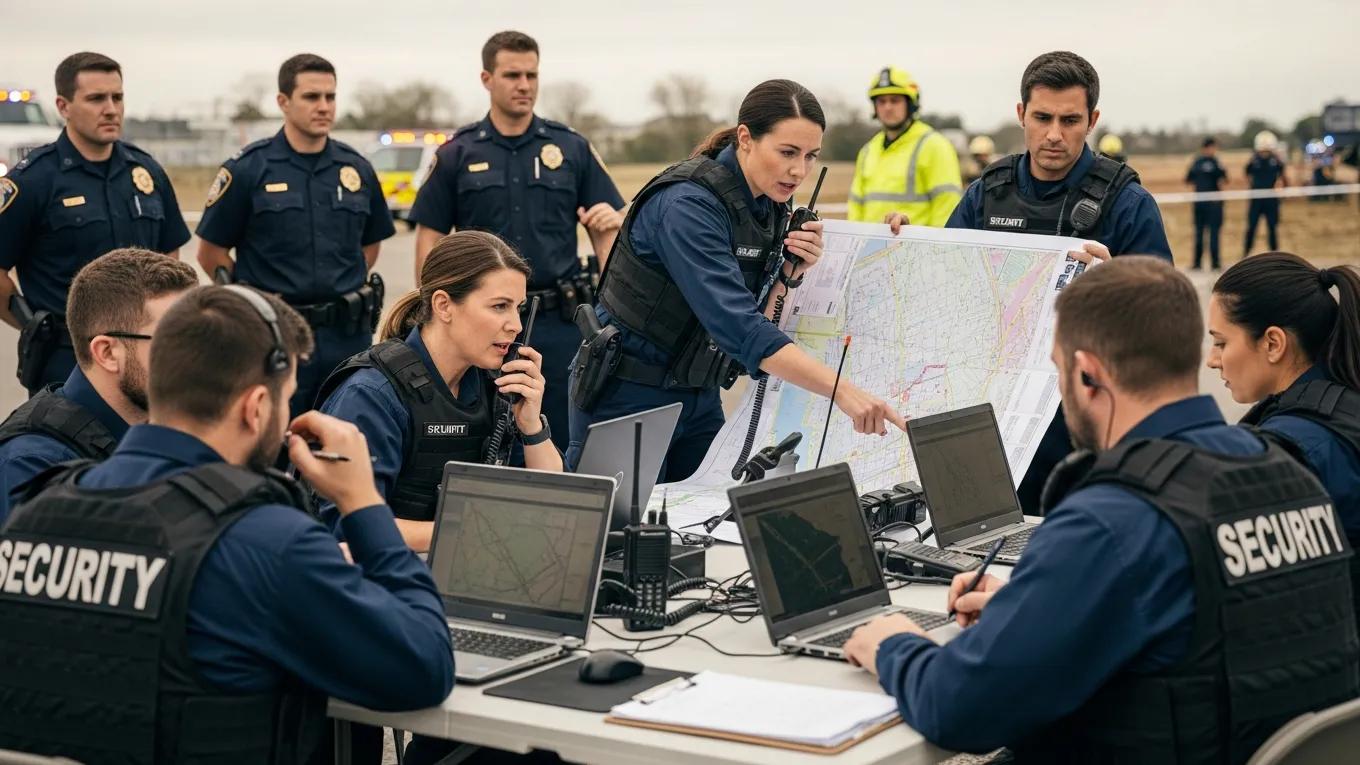
Security personnel play a vital role in incident command systems by providing immediate response capabilities and managing access control during emergencies. Their training equips them to coordinate with emergency services, ensuring a unified response to incidents. By understanding their responsibilities, security teams can act decisively and effectively, minimizing the impact of crises on the organization.
How Are Communication Protocols Integrated into Emergency Procedures?
Effective communication is crucial during emergencies, and integrating robust communication protocols into emergency procedures is essential. Organizations should establish direct communication channels with authorities and ensure regular check-ins and updates among team members. By prioritizing clear communication, businesses can enhance their situational awareness and ensure that all stakeholders are informed and prepared to act.
Ultimately, a well-structured and efficient incident management process is paramount for achieving effective cybersecurity incident response outcomes.
Optimizing Incident Management for Cybersecurity Response
With the ever-increasing number and sophistication of cyber threats, organizations face significant challenges in safeguarding their information systems and sensitive data. To mitigate these risks, an efficient and well-structured incident management process is essential for effective cybersecurity incident response. This thesis explores the optimization of incident management processes to enhance the speed, accuracy, and overall effectiveness of incident response activities. Through a comprehensive analysis of existing frameworks, methodologies, and technologies, this research aims to provide insights into key strategies for optimizing incident management processes and achieving improved cybersecurity incident response outcomes.
Optimizing Incident Management Processes for Effective Cybersecurity Incident Response, 2025
What Technology Solutions Enhance Emergency Response and Crisis Management?

Technology plays a significant role in enhancing emergency response and crisis management. Various solutions, such as emergency response security teams, advanced communication tools, and medical training programs, can significantly improve an organization’s preparedness. By leveraging these technologies, businesses can streamline their response efforts and ensure that they are equipped to handle emergencies effectively.
How Does UPM Security Customize Emergency Response Plans for Diverse Client Needs?
UPM Security specializes in creating customized emergency response plans tailored to the unique needs of its clients. This process begins with comprehensive consultations that assess the specific risks faced by high-net-worth individuals and businesses. By understanding each client’s requirements, UPM Security develops targeted strategies that enhance their security posture and ensure effective crisis management.
What Consultation Processes Tailor Plans for High-Net-Worth Individuals and Businesses?
The consultation process for tailoring emergency response plans involves complimentary site assessments and proactive threat evaluations. UPM Security’s experts work closely with clients to identify vulnerabilities and develop strategies that address their specific needs. This personalized approach ensures that clients receive the most effective security solutions tailored to their circumstances.
How Do Case Studies Demonstrate Successful Emergency Response Implementations?
Case studies provide valuable insights into the effectiveness of emergency response implementations. By examining past incidents, organizations can learn from successful responses and identify areas for improvement. UPM Security’s collaboration with local law enforcement during emergencies has demonstrated the importance of coordinated efforts, highlighting lessons learned that can enhance future response strategies.