Disaster Security Services — Rapid Response When It Matters Most
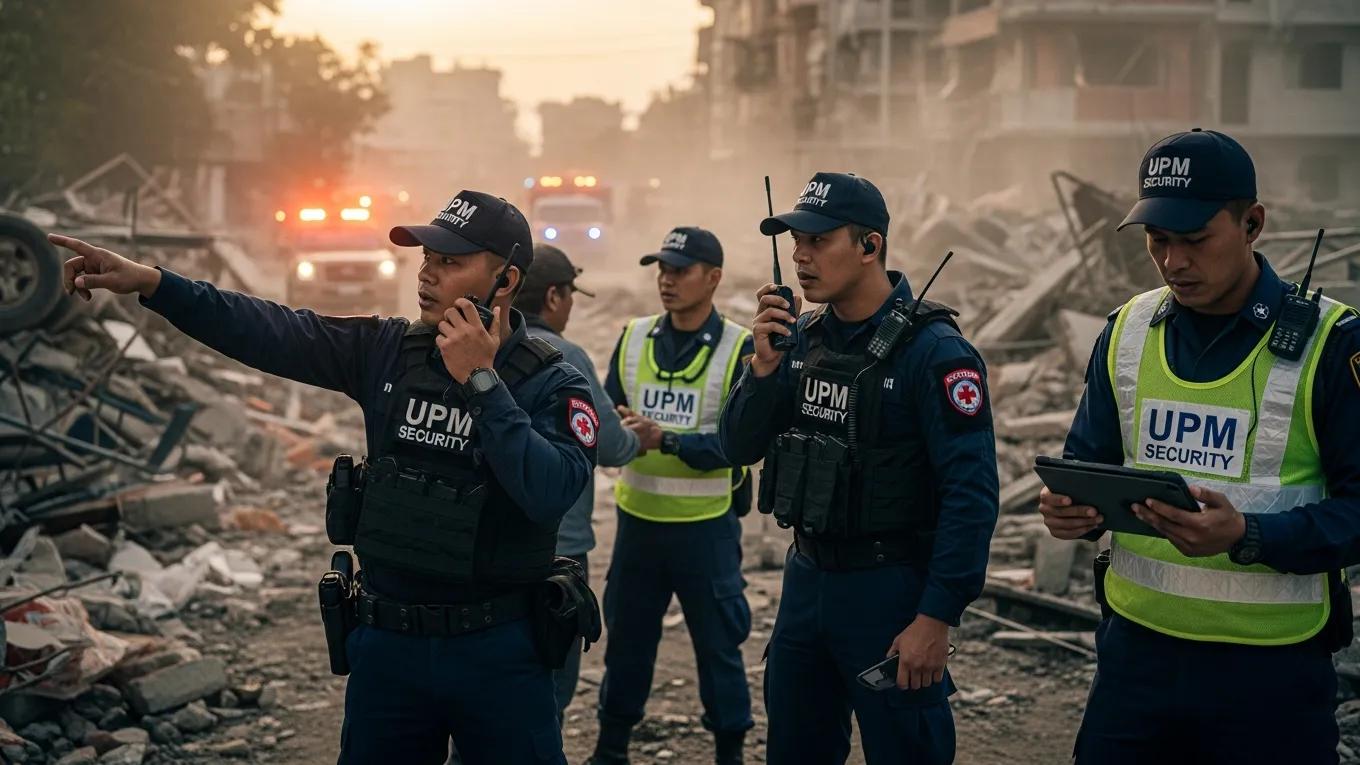
Disaster Security — Rapid Response When Every Second Matters
By Alex Polazzo, UPM Security
When a crisis occurs, fast, dependable disaster security can be the difference between containment and chaos. Our services are built to provide immediate protection for people and property, stabilize scenes, and create the secure conditions recovery teams need to work. Below we explain the types of disaster security support available, how those services perform under pressure, and how UPM Security tailors solutions for businesses and high-risk clients. That clarity helps organizations make better decisions about preparedness and resilience.
At the heart of effective disaster security are proactive planning and the ability to perform consistently in fast-changing, high-stress conditions.
Disaster Security, Risk Mitigation & Emergency Preparedness
Mobilizing communities to reduce risk and prepare for possible security incidents requires methods that also perform reliably in the urgent, rapidly shifting conditions of disaster response.
Risk, security, and disaster management, LK Comfort, 2005
Types of Services Offered:
UPM Security provides a range of disaster response services tailored to different needs. Core offerings include:
- Special Emergency Response Team: A dedicated unit trained to deploy rapidly and restore order in chaotic scenes.
- 24/7 Emergency Response: Around-the-clock readiness so teams can move immediately when an incident occurs.
- Coordination with Local Authorities: Integrated collaboration with law enforcement and emergency services for a unified, effective response.
Each service is structured to meet the real demands of emergencies so clients receive timely, practical support when it matters most.
Effectiveness in Crisis Situations:
Performance under pressure is nonnegotiable. UPM Security’s approach focuses on:
- Immediate Response: Rapid deployment of trained teams to stabilize the scene and begin assessment.
- Proactive Monitoring: Continuous surveillance and threat evaluation to identify risks before they escalate.
- Medical and Emergency Response Capability: Staff trained to provide first aid and coordinate with medical responders on site.
These measures reduce risk and damage, helping clients regain control and move toward recovery more quickly.
Today’s disaster response increasingly depends on security teams as frontline responders, with personnel often providing critical medical support in the first minutes after an incident.
Security Guards as Emergency First Responders
Public sector pressures have led to new partnerships between emergency responders, professionals from other fields, and community volunteers. As these collaborations expand, it’s important to understand the tasks, requirements, and challenges faced by these new resources when they act as medical first responders.
Using security guards and civil volunteers as first responders in medical emergency response—Tasks, needs, and challenges, S Pilemalm, 2019
UPM Security supports its teams with rigorous training and purpose-built technology to boost situational awareness and operational effectiveness.
Key Features Enhancing Safety and Security:
Several capabilities strengthen UPM Security’s disaster services:
- Highly Trained Professionals: Scenario-driven training prepares personnel to act calmly and correctly under stress.
- Access Control: Controlled perimeters and entry procedures protect critical assets and keep unauthorized people out.
- Communication Systems: Robust, reliable communications keep teams and partners connected in real time.
Together, these elements create a resilient framework that improves safety and enables coordinated action during emergencies.
What Are Emergency Security Services and Their Role in Disaster Response?
Emergency security services provide on-the-ground protection during crises. They offer immediate assistance, secure scenes, and support recovery through risk assessment, emergency planning, and active operational presence. Close coordination between security teams, local authorities, and emergency services is essential for an effective response.
Clear communication and collaborative planning make sure every responder understands roles and priorities during an incident.
How Rapid Disaster Protection Enhances Client Safety During Emergencies
Rapid disaster protection prioritizes speed and clarity. Key elements include:
- Immediate Response: Teams deploy quickly to assess threats and put protective measures in place.
- Access Control: Secure perimeters and checkpoints shield clients and assets from further harm.
- On-Site Support: Real-time guidance and hands-on assistance for clients and staff throughout the incident.
By emphasizing fast deployment and clear communication, UPM Security reduces harm and helps clients navigate critical moments with greater safety and confidence.
How Does UPM Security Ensure Swift Deployment in Disaster Scenarios?
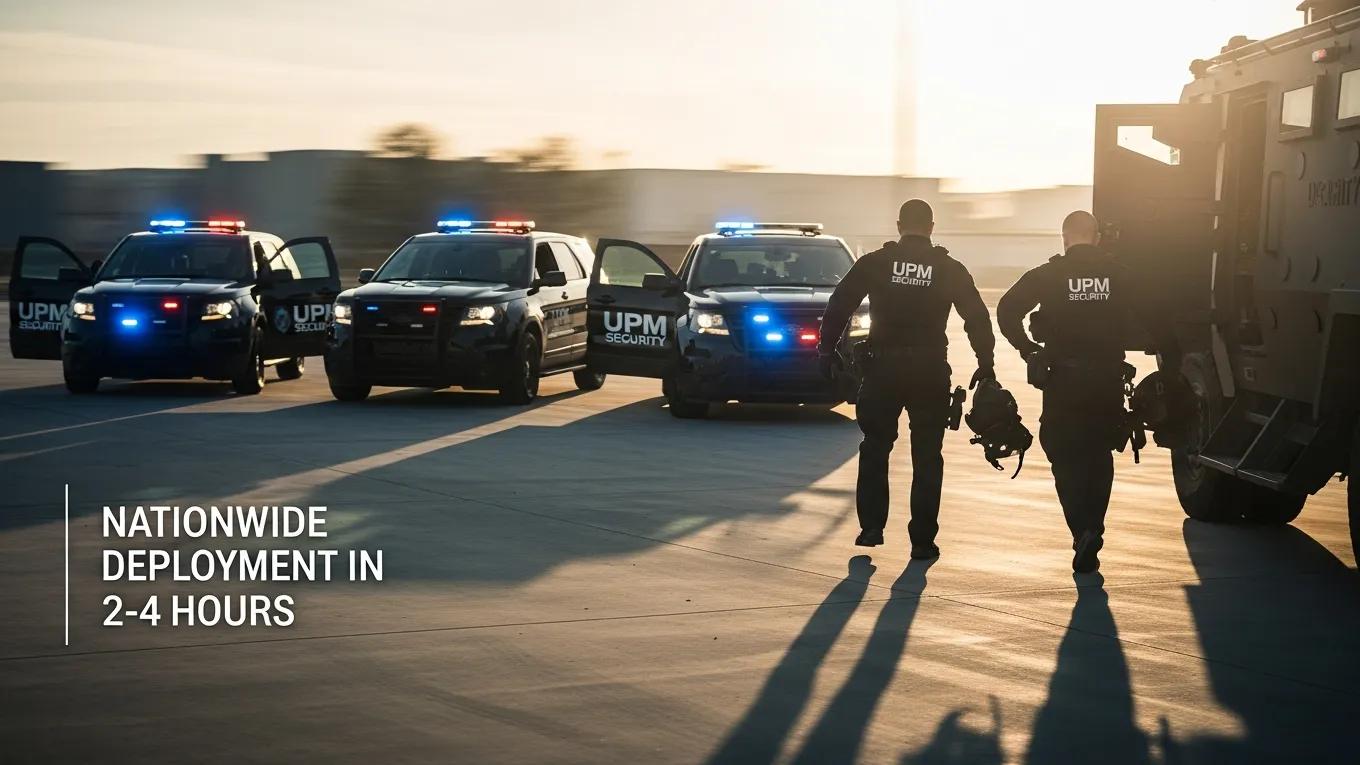
UPM Security follows repeatable protocols to mobilize quickly and effectively:
- Protocols for Rapid Mobilization: Predefined procedures that speed assembly and deployment of teams.
- Technology and Tools Used: Communications and command systems that streamline coordination and situational reporting.
- Coordination with Authorities: Pre-established channels with local law enforcement and emergency services to enable a unified response.
These practices allow UPM Security to respond efficiently, minimize disruption, and accelerate recovery.
Technology and Tools Used for Effective Disaster Response Security
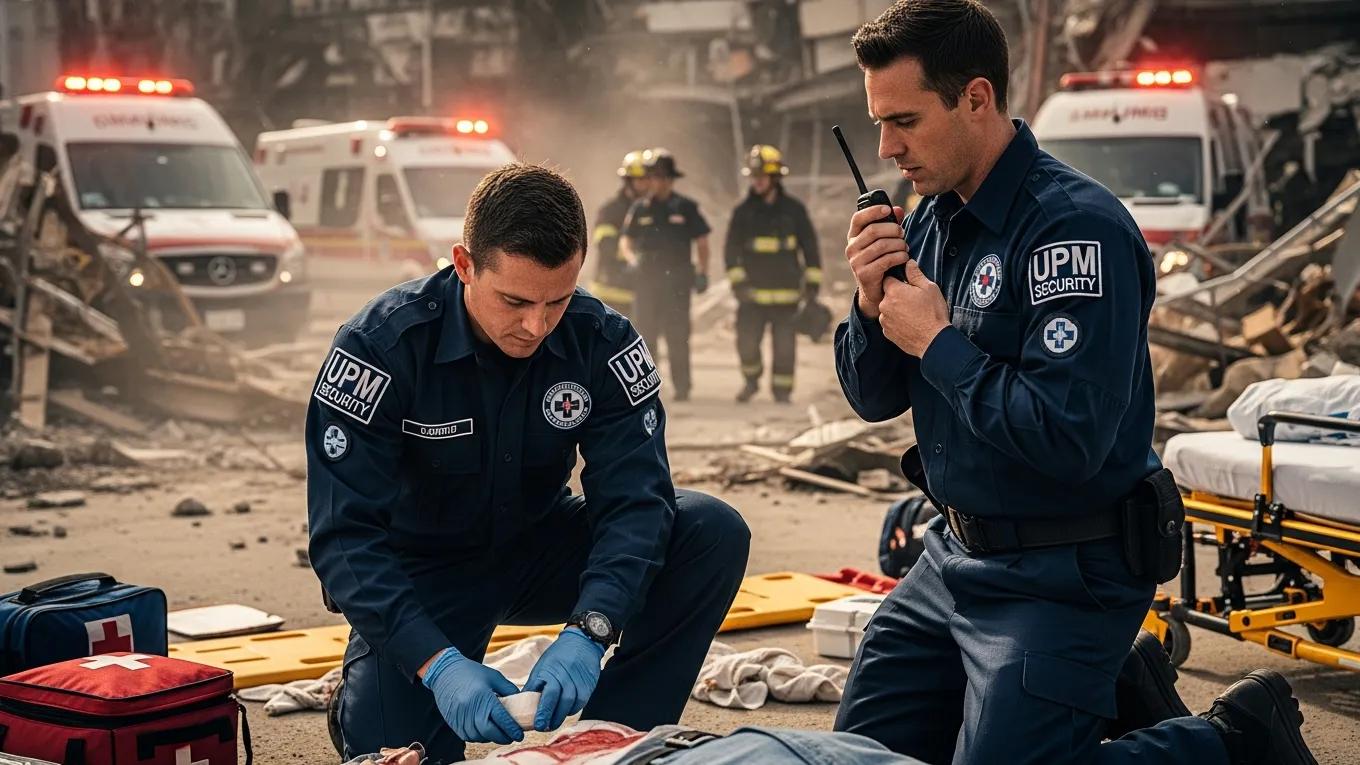
UPM Security relies on proven equipment to support response operations:
- Emergency Portable Generators: Sustain power for communications and essential systems during outages.
- 2-Way Radios: Provide reliable, real-time voice communications across the field.
- Rescue & Recovery Gear: Tools and equipment that enable safe rescue and recovery work on site.
These resources help teams operate effectively in adverse conditions and provide consistent support to clients.
Which Protective Solutions Are Tailored for Businesses and High-Risk Clients?
UPM Security builds protective packages to suit the needs of businesses and high-risk individuals. Core options include:
- 24/7 Emergency Response: Continuous readiness and rapid dispatch when incidents occur.
- Access Control: Layered measures to protect sensitive areas and critical infrastructure.
- On-Site Security Personnel: Trained staff to manage scenes, secure properties, and support crisis operations.
These tailored solutions provide the appropriate level of protection for each client’s risk profile.
Customized Security Plans for Businesses and Event Organizers
Security is most effective when it’s tailored. UPM Security’s planning process includes:
- Assessment of Security Needs: A detailed evaluation of client-specific risks and vulnerabilities.
- Emergency Action Plans: Clear, actionable procedures that define roles, routes, and priorities during an incident.
- Training for Security Staff: Practical, scenario-driven training so personnel can carry out plans confidently and consistently.
By aligning plans to real-world conditions, UPM Security helps organizations remain prepared and resilient.
Security Services for Public Figures and High-Net-Worth Families
UPM Security delivers discreet, professional protection for public figures and high-net-worth families. Services include:
- Executive Protection Services: Personal security designed to reduce risk while preserving privacy.
- Crowd Control Measures: Managed strategies to keep public events safe and orderly.
- Secure Travel Services: Coordinated, secure transportation for domestic and international movement.
These services address the unique security concerns of high-profile clients with discretion and care.
How Can Clients Engage UPM Security for Consultation and Crisis Management?
Clients can begin the engagement process in a few straightforward steps:
- Initial Contact Methods: Reach out by phone or email to start the conversation.
- Consultation Scheduling: Book a consultation to assess needs and outline a tailored plan.
- Post-Incident Support: Ongoing assistance after an event, including recovery planning and after-action reviews.
For more information, clients can contact UPM Security at (813) 680-5418 or via email at Security@upmflorida.com.
Frequently Asked Questions About Security Services for Emergencies
- What are disaster security services? Disaster security services are specialized teams and plans that protect people and property during emergencies, offering immediate assistance and operational support to stabilize the situation.
- How quickly can emergency security respond? Emergency teams maintain constant readiness and can begin deployment as soon as an incident is reported.
- What security measures are used during disaster relief? Common measures include access control, on-site security personnel, and coordinated operations with local authorities to deliver a comprehensive response.
This information is presented in UPM Security’s professional, client-focused voice to read naturally and consistently across our communications.