Florida Security Guard Licensing and Regulatory Compliance

Florida Security Guard Licensing and Regulatory Compliance: Essential Requirements and Procedures for Professionals
By Alex Polazzo, Universal Protection Management
Navigating the landscape of security guard licensing in Florida is crucial for professionals seeking to establish a career in this field. This article provides a comprehensive overview of the essential requirements and procedures necessary for obtaining and maintaining a Florida security guard license. Readers will learn about eligibility criteria, mandatory training requirements, renewal processes, and key regulatory compliance obligations. Understanding these elements is vital for ensuring that security personnel meet state standards and operate within legal frameworks. As the demand for security services continues to grow, so does the importance of adhering to licensing regulations. This guide will cover the eligibility criteria, training requirements, renewal processes, and compliance obligations that every security guard in Florida must know.
What Are the Eligibility Criteria for Obtaining a Florida Security Guard License?
To obtain a Florida security guard license, applicants must meet specific eligibility criteria set forth by the state. These requirements ensure that only qualified individuals are entrusted with security responsibilities. The primary criteria include age, residency, and background checks, which are essential for maintaining public safety and trust.
Understanding Florida Security Guard Requirements and Background Checks
The Florida Department of Agriculture and Consumer Services (FDACS) mandates that all security guard applicants undergo thorough background checks. This process includes fingerprinting and a review of criminal history to ensure that candidates do not have disqualifying offenses. Required documentation typically includes proof of age, residency, and any prior training certifications. Common disqualifiers may include felony convictions or certain misdemeanors that could impact a candidate’s ability to perform security duties effectively.
How Does the Florida Department of Agriculture and Consumer Services Regulate Licensing?
The FDACS plays a pivotal role in regulating security guard licensing in Florida. This agency is responsible for overseeing the licensing process, ensuring compliance with state laws, and maintaining public safety standards. The licensing process involves submitting an application, undergoing background checks, and completing required training programs. Compliance with these regulations is crucial for both the security personnel and the organizations that employ them.
What Are the Mandatory Security Guard Training Requirements in Florida?
In Florida, security guards must complete specific training programs to qualify for licensure. These training requirements are designed to equip security personnel with the necessary skills and knowledge to perform their duties effectively and safely.
Overview of Required Training Hours and Certification Standards
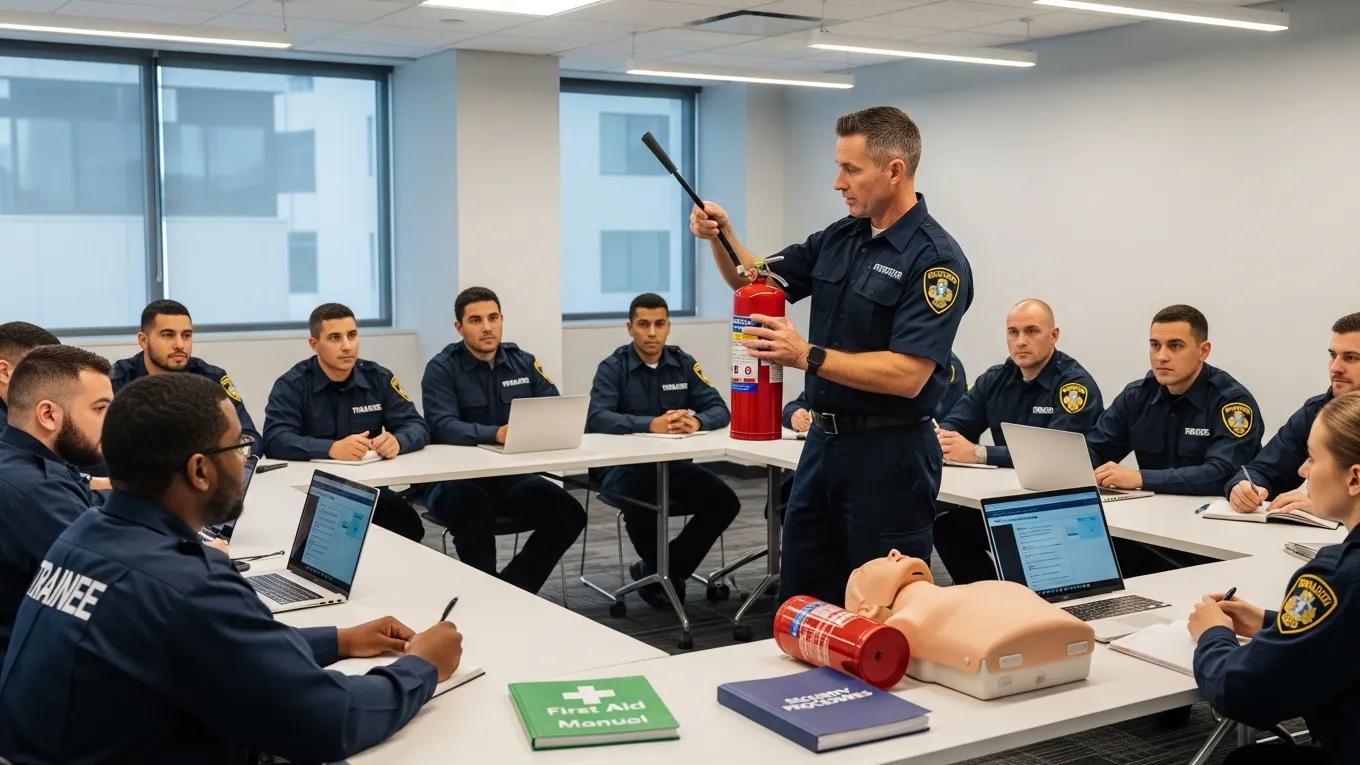
Florida mandates a minimum of 40 hours of training for unarmed security guards and 28 hours for armed security guards. This training covers essential topics such as legal responsibilities, emergency procedures, and conflict resolution. Certification standards require that training programs be approved by the FDACS, ensuring that they meet state educational requirements.
How to Complete Security Guard Training Programs Compliant with Florida Regulations
To complete security guard training programs compliant with Florida regulations, candidates should seek accredited training providers. The enrollment process typically involves submitting an application and paying any associated fees. Upon completion of the training, candidates must pass a final examination to receive their certification, which is a prerequisite for obtaining a security guard license.
After fulfilling the training requirements, candidates can proceed to apply for their security guard license, ensuring they are well-prepared for the responsibilities ahead. UPM Security offers comprehensive training programs that align with Florida’s regulatory standards, providing candidates with the knowledge and skills necessary for success in the field.
How Is the Florida Security Guard License Renewed and What Are Continuing Education Obligations?
Renewing a Florida security guard license is a critical process that ensures ongoing compliance with state regulations. License holders must be aware of the renewal timeline and the continuing education requirements necessary to maintain their licensure.
Step-by-Step Florida Security Guard Renewal Process

The renewal process for a Florida security guard license typically involves submitting a renewal application to the FDACS, along with any required documentation and fees. License holders should begin this process at least 60 days before their license expiration date to avoid any lapses in their certification. It is essential to keep track of renewal deadlines to ensure uninterrupted employment in the security field.
What Continuing Education and Compliance Updates Are Required for License Holders?
Continuing education is a vital component of maintaining a Florida security guard license. License holders are required to complete a minimum of 4 hours of continuing education every two years. This education may cover updates on laws, regulations, and best practices in the security industry. Staying informed about compliance updates is crucial for ensuring that security personnel operate within the legal framework and uphold the highest standards of professionalism.
What Are the Key Regulatory Compliance Obligations for Security Guards in Florida?
Security guards in Florida must adhere to various regulatory compliance obligations to ensure they operate within the law. These obligations encompass licensing requirements, training mandates, and documentation responsibilities.
Legal Responsibilities and Employment Regulations for Licensed Security Guards
Licensed security guards are expected to understand and comply with legal responsibilities that govern their conduct. This includes adhering to employment regulations, maintaining accurate records, and reporting any incidents that occur while on duty. Failure to comply with these obligations can result in disciplinary action, including the revocation of a security guard license.
How UPM Security Ensures Compliance with Florida Security Guard Licensing Standards
UPM Security is committed to ensuring compliance with Florida security guard licensing standards. The company provides ongoing training and support to its security personnel, helping them stay informed about regulatory changes and best practices. By prioritizing compliance, UPM Security not only protects its employees but also enhances the safety and security of the communities it serves.